How it works
A photo of their drawing goes in. It comes out as a character they can take on an adventure. Here is everything that happens to it, and what does not.
The four steps
- 1
Photograph it
Phone photos are fine — crooked, glared, on lined paper.
- 2
We keep it exactly
Lifted off the paper exactly as drawn, and read: who's in it, what it's made with. Names come from you.
- 3
Add the next one
If someone looks like the dinosaur from March, we say “likely” and ask you. Their world counts who and where, and replays it in order.
- 4
Bring it to life
Put their characters in a short adventure you play together, where they choose what happens. And a link for grandparents you can switch off.
What we keep
The photo you take, turned the right way up and levelled so paper reads as paper, with the phone's own data removed. The drawing itself is untouched: nothing is smoothed, redrawn or “improved”. The original stays on your fridge; we only ever need the photo.
What we read
A model describes what it can see: each figure, in words; the other things on the page; where it seems to be set; what it was drawn with; and whether there is writing on it, which it leaves unread. It never names anyone. Their name, and their characters' names, come from you.
What we notice
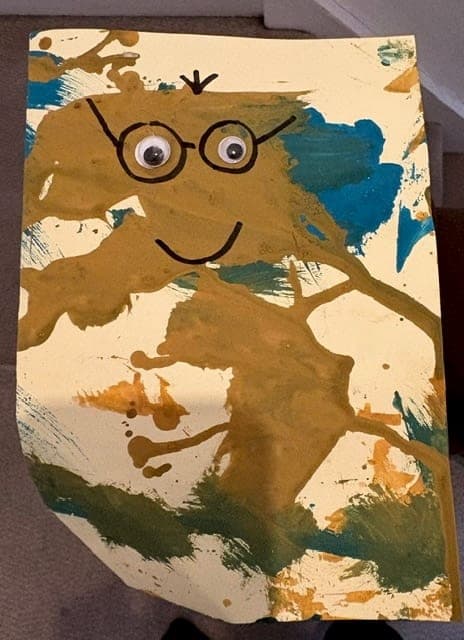
Exactly what we noticed in these two, in the words a parent gets.
What you send 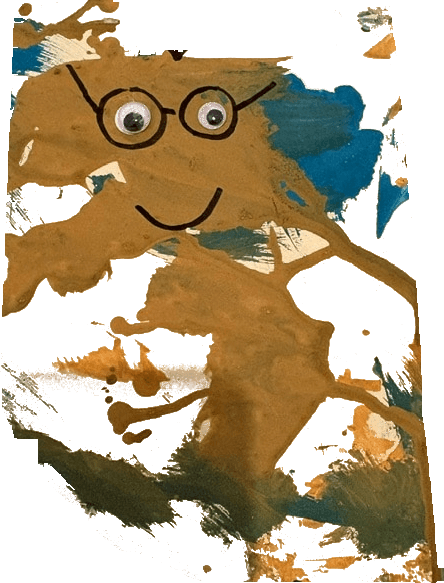
What we cut out What we noticed
- Amorphous blob-shaped creature made from brown paint splatters, with two round googly eyes stuck on, circular glasses drawn in black, a small curved smile, and a few short lines above the glasses suggesting hair or a mark
creaturesfacesabstractcollage
Paint, googly eyes (collage element), black felt-tip or marker.
paint on card
What you send 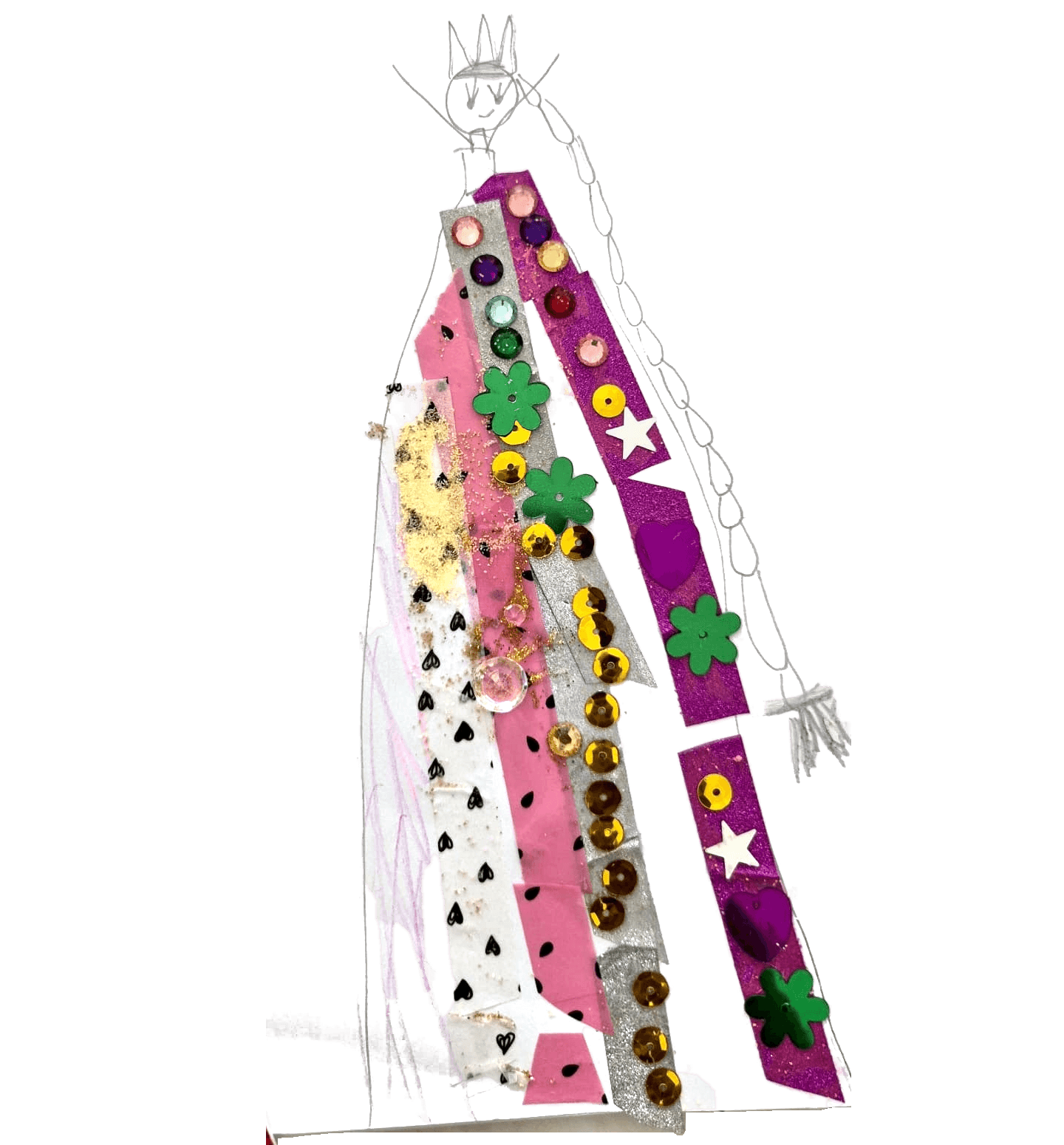
What we cut out What we noticed
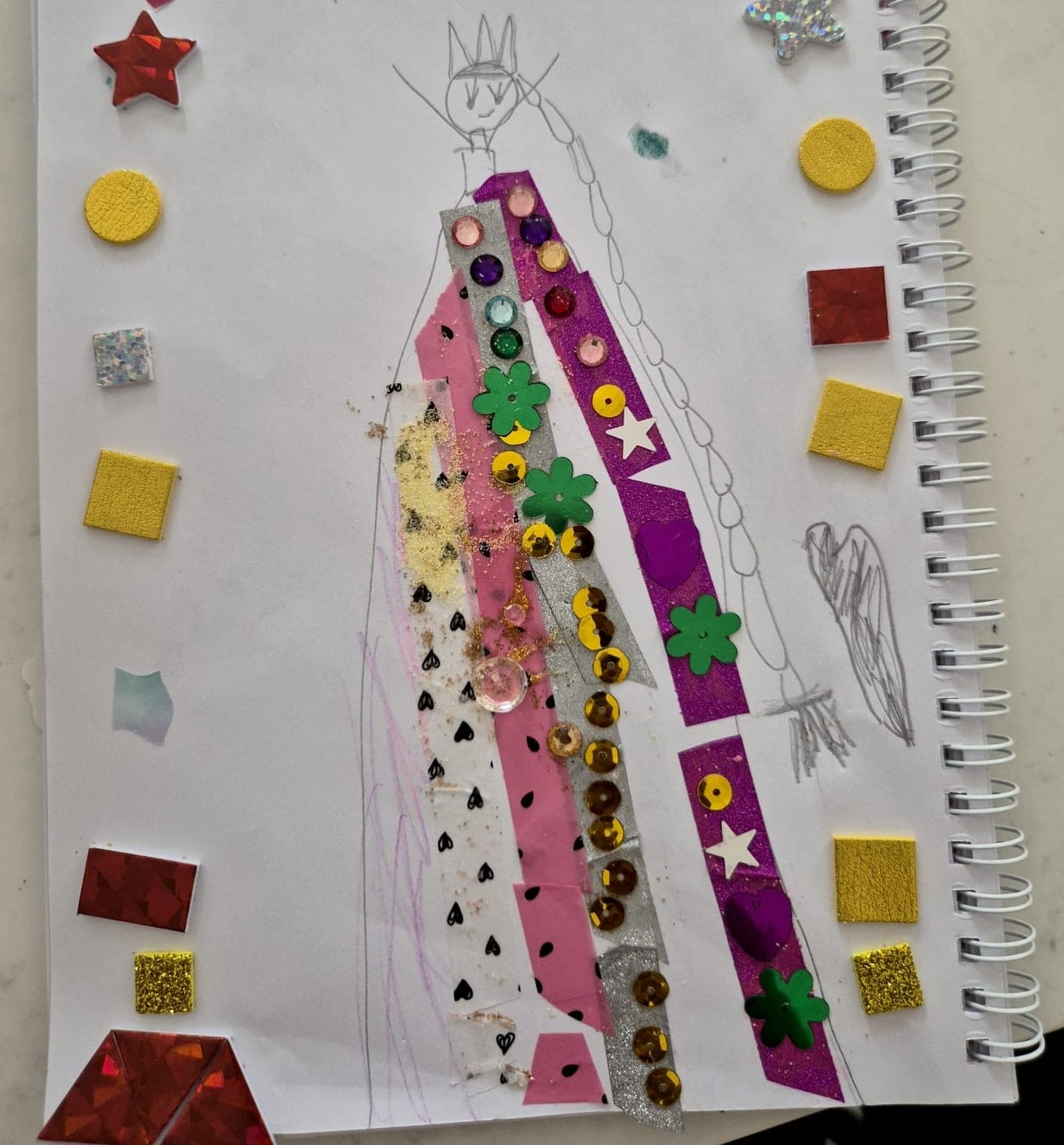
- Tall slender figure drawn in pencil with a small round head, dot eyes, a small smile, stick arms held out wide, and a large triangular dress-shaped body decorated with collaged strips of pink, purple, silver and white patterned tape
Also: collaged sequin and gem embellishments on dress, yellow foam circle sticker on left, yellow foam circle sticker on right, red foil star sticker top left, holographic star sticker top right, holographic square sticker left, and 5 more.
princessdress-updecorationroyaltycollage
Mixed.
mixed on sketchbook
Read on 2026-09-21 by the same model your drawings get, unedited.
How characters are linked
When a new drawing arrives, its figures are compared with the characters already in the record. A close match is “likely”, a looser one “possibly”, and either is a question on the page: Yes, No, or give them a name. “Certain” only ever means you said yes. No splits them apart; two you know are one can be merged. The picture beside each character is a crop of your child's own drawing, never a redrawing.
Their world
The world page counts the drawings, the span since the first, the characters and the places, and writes a few sentences it can stand behind, such as “Dino is in 3 drawings, since 4 March 2026.” Each character has a page: first seen, then and now, every appearance. The replay shows the drawings in order, one per beat, with a plain list underneath.
Adventures
Choose who is in it, from any of your children, and one of six stories: Dinosaur Rescue, Space Mission, Magical Forest, Monster Hunt, and one each for Christmas and Halloween. Dinosaur Rescue and the Halloween story can be played with one character; the others take two. A story is five to seven scenes. Where there is a choice to make you get one question to ask out loud, and then they choose; what they choose changes what happens next, and in those two where the story goes and which of four ways it ends. The stories are written in advance and are the same for every family. Nothing is made up while you play. The places they happen in are paintings we made once with an image model, from our own words; your child's drawing is never sent to it, and stands in the picture on its own paper, exactly as drawn. When it moves, it moves as a piece of card would: slid and turned, never bent.
Keeping it
A finished adventure can become an art print, a framed print, a canvas, a fridge magnet or a glow-in-the-dark print whose characters glow, and the Christmas story a pack of cards; a single drawing can become any of those, or stickers. You see the exact print file and confirm it before you pay, and it is printed exactly as you saw it.
What is not built yet
A printed book of a year of drawings. And we haven't held a printed copy of anything yet, so we make no promise about paper or print quality.